


Rare Diagnostics
LPC Derivatives of Very Long-Chain Fatty Acids (VLCFA) — Dried Blood Spot Test
LPC Derivatives of Very Long-Chain Fatty Acids (VLCFA) — Dried Blood Spot Test
⚠️ Important — please read before ordering
The diagnostic services offered on this website are in vitro diagnostic tests intended to provide quantitative information on specific biochemical biomarkers. All results should be interpreted by a qualified healthcare professional — such as a physician, clinical geneticist, or metabolic specialist — in the context of the individual's clinical history and symptoms. These services are intended to support, not replace, medical consultation, diagnosis, or treatment. A positive, negative, or borderline result does not constitute a medical diagnosis. Rarediagnostics.eu is powered by Masdiag Sp. z o.o., a registered medical laboratory (podmiot leczniczy) operating under Polish and EU healthcare regulations.
Couldn't load pickup availability
Share
A specialised dried blood spot (DBS) test measuring lysophosphatidylcholine (LPC)
derivatives of very long-chain fatty acids (VLCFA) — the most sensitive and specific
biochemical marker for peroxisomal disorders, including X-linked adrenoleukodystrophy (X-ALD), Zellweger spectrum disorder, and related conditions. Available to patients and clinicians across the European Union.
What is the LPC-VLCFA test?
Very long-chain fatty acids (VLCFA) are fatty acids with carbon chains of 22 carbons or more. Under normal conditions, VLCFA are broken down inside cellular organelles called peroxisomes. When peroxisomal function is impaired — due to inherited genetic defects — VLCFA accumulate in tissues and body fluids, causing progressive and often severe neurological and systemic damage.
The measurement of lysophosphatidylcholine (LPC) derivatives of VLCFA from a dried blood spot sample represents the current gold standard for peroxisomal disorder screening. LPC- bound VLCFA offer superior analytical sensitivity and specificity compared to traditional free VLCFA measurement, enabling earlier and more reliable detection — even in female carriers of X-linked conditions.
This test measures three key LPC-VLCFA species:
- LPC 26:0 — lysophosphatidylcholine with C26:0 (hexacosanoic acid)
- LPC 26:1 — lysophosphatidylcholine with C26:1
- LPC 24:0 — lysophosphatidylcholine with C24:0 (lignoceric acid)
The analysis is performed using liquid chromatography-tandem mass spectrometry (LC-MS/MS) at our specialist laboratory in Warsaw.
Which rare diseases can this test detect?
X-linked adrenoleukodystrophy (X-ALD): The most common peroxisomal disorder, caused by mutations in the ABCD1 gene. X-ALD affects the nervous system and adrenal glands, with clinical presentations ranging from childhood cerebral form (CCALD) to adrenomyeloneuropathy (AMN) in adults, and adrenal insufficiency (Addison disease).
Zellweger spectrum disorder (ZSD): A group of severe peroxisome biogenesis disorders caused by mutations in PEX genes, ranging from Zellweger syndrome to neonatal adrenoleukodystrophy and infantile Refsum disease.
ACOX1 deficiency: A deficiency of acyl-CoA oxidase 1 — the first enzyme in peroxisomal fatty acid beta-oxidation — leading to VLCFA accumulation and progressive neurological deterioration.
D-bifunctional protein (DBP) deficiency: A severe peroxisomal disorder affecting fatty acid oxidation, presenting in the neonatal period.
Why LPC-VLCFA rather than traditional VLCFA testing?
- Higher sensitivity — detects affected individuals and carriers with greater reliability
- Female carrier detection — traditional VLCFA testing misses a significant proportion of female X-ALD carriers; LPC-VLCFA substantially improves detection rates
- DBS compatibility — enables home-based sample collection and stable postal
shipping - Suitable for newborn screening — used in several national newborn screening
programmes in Europe and the USA
Who is this test for?
- Male children with suspected X-ALD — unexplained neurological deterioration, white matter disease on MRI, or adrenal insufficiency
- Adult males with progressive spastic paraparesis or adrenomyeloneuropathy of
unknown cause - Female carriers of X-ALD mutations — for biochemical confirmation
- Newborns or infants with suspected Zellweger spectrum disorder
- Patients with unexplained progressive leukodystrophy or white matter abnormalities
- Family members of patients with confirmed peroxisomal disorders — for cascade
screening - Clinicians and neurologists investigating peroxisomal disease
- Researchers studying peroxisomal biology or VLCFA metabolism
|
Price |
€130 |
|
Sample type |
Dried blood spot (DBS) — capillary blood |
|
Collection method |
Fingertip lancet (included in kit) |
|
Analytes measured |
LPC 26:0, LPC 26:1, LPC 24:0 |
|
Analytical method |
LC-MS/MS |
|
Turnaround time |
10 business days from sample receipt |
|
Kit delivery |
1–2 business days (EU) |
|
Report format |
PDF with quantitative results, reference ranges and interpretation |
|
Suitable for |
All ages including newborns |
Frequently Asked Questions
What does an elevated LPC-VLCFA result mean? ▼
Elevated LPC-VLCFA levels are a strong biochemical indicator of a peroxisomal disorder, most commonly X-ALD. All abnormal results should be urgently reviewed by a specialist. Confirmatory molecular genetic testing is required for a definitive diagnosis.
Can this test detect X-ALD in female carriers? ▼
Yes. The LPC-VLCFA test detects the majority of female X-ALD carriers — a significant advantage over traditional plasma VLCFA testing.
My son has been diagnosed with X-ALD — should his sisters be tested? ▼
Yes. Female first-degree relatives of males with confirmed X-ALD should be offered carrier testing. LPC-VLCFA from DBS is an appropriate first-line biochemical screening test.
Do I need a referral? ▼
No referral is required. Given the severity of peroxisomal disorders, we strongly recommend all results are reviewed without delay by a specialist.


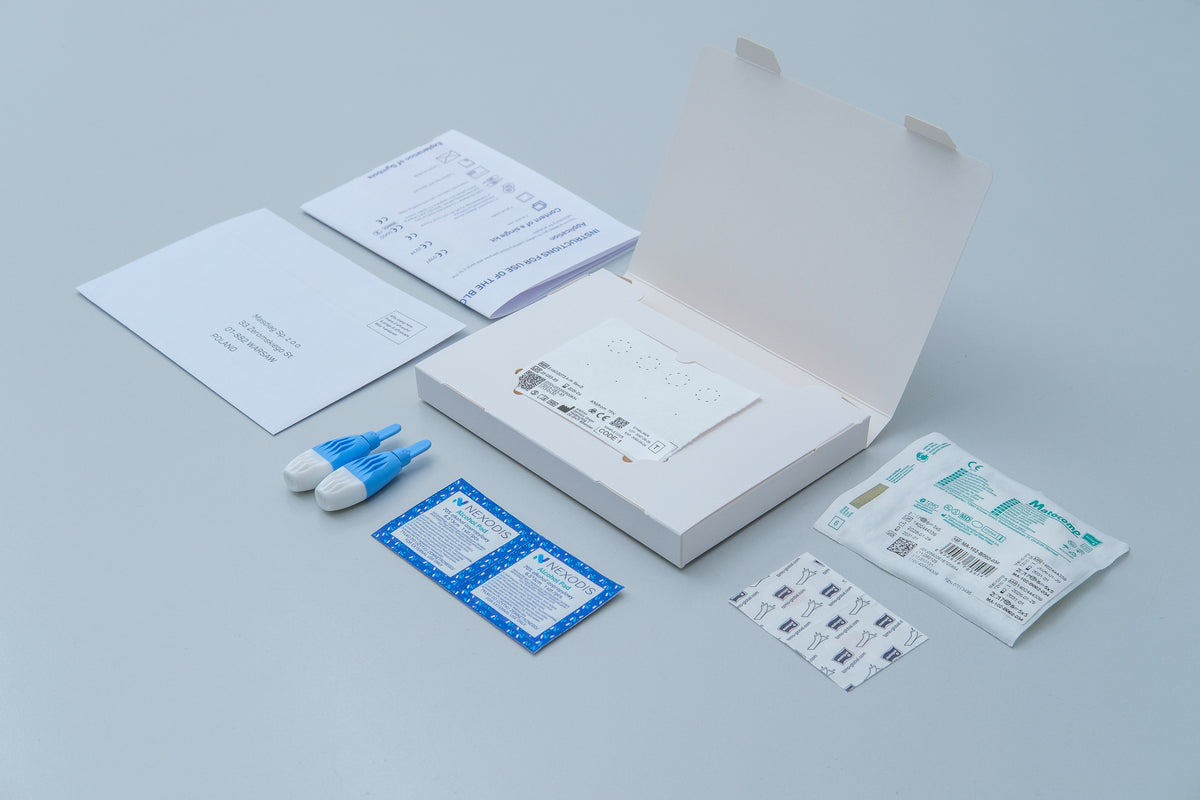
How does it work?
Step 1 — Order your test kit
Order online. Your DBS collection kit will be shipped to your address anywhere in the European Union, typically within 1–2 business days.
Step 2 — Collect your sample at home
Using the enclosed lancet, collect a few drops of capillary blood from your fingertip (or heel for newborns). Apply the drops to the filter paper card provided. Allow to dry at room temperature for 2–3 hours. No medical professional is required for collection.
Step 3 — Send your sample
Place the dried filter paper in the enclosed return envelope and send it to our laboratory in Warsaw. DBS samples are stable at room temperature and can be shipped across the EU without refrigeration.
Step 4 — Receive your results
Results are delivered within 10 business days of sample receipt. You will receive a detailed laboratory report with quantitative results and interpretive comments.